The Hardest Types of Wood: A Complete Species Guide
Explore the hardest types of wood for construction. Compare Janka ratings, pricing, and fabrication specs for Ipe, Hickory, Cumaru, and exotic hardwoods.
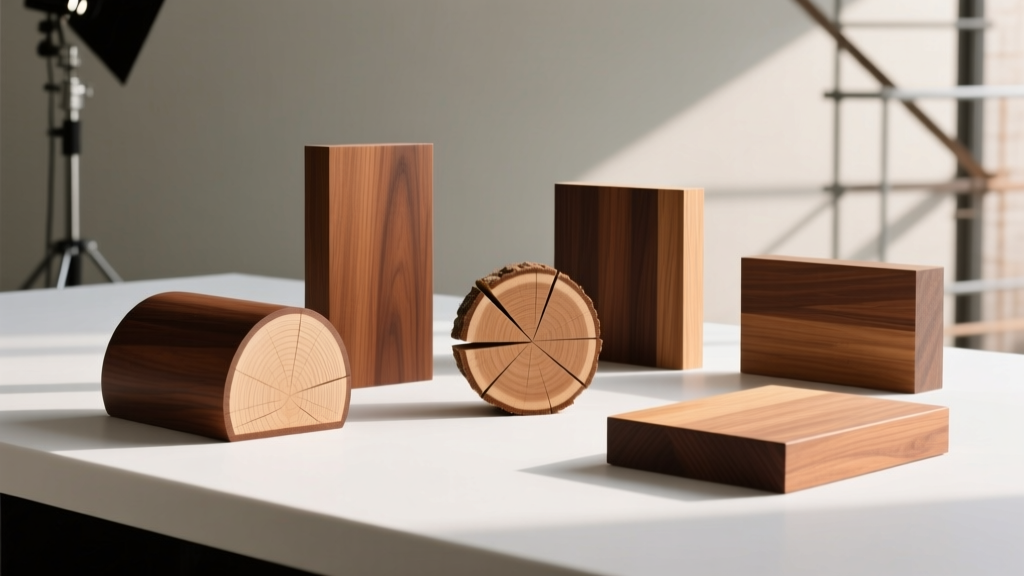
The Engineering Physics of Wood Hardness
When architects and structural engineers specify the hardest types of wood, they are not merely looking for dent resistance; they are targeting high specific gravity, superior shear strength, and extreme decay resistance. In materials science, wood hardness is quantified using the Janka hardness test, standardized under ASTM D143 protocols. This test measures the force required to embed a 0.444-inch (11.28 mm) steel ball halfway into the wood grain, reported in pounds-force (lbf) or Newtons (N).
Timber with a Janka rating exceeding 2,000 lbf is generally classified as ultra-hard. These species possess tightly packed cellular structures, often accompanied by high concentrations of natural oils, resins, or silica, which provide innate resistance to rot, insects, and moisture ingress.
The Ultra-Hard Exotics: 3,000+ lbf Janka
The absolute hardest woods on the planet are primarily dense tropical hardwoods. While some are restricted by international trade agreements, others form the backbone of premium exterior construction and heavy-duty industrial flooring.
| Species | Janka (lbf) | Specific Gravity | Primary Application | 2026 Avg Price/BF |
|---|---|---|---|---|
| Australian Buloke | 5,060 | 0.95 | Specialty turnery, industrial | $45 - $60 |
| Lignum Vitae | 4,500 | 1.05 | Marine bearings, mallets | $100+ (Restricted) |
| Ipe (Brazilian Walnut) | 3,510 | 0.85 - 0.90 | Decking, boardwalks, siding | $13 - $18 |
| Cumaru (Brazilian Teak) | 3,330 | 0.80 - 0.85 | Decking, heavy flooring | $7 - $11 |
Ipe (Handroanthus spp.): The Exterior Standard
Ipe remains the undisputed king of exterior hardwood decking. With a Class A fire rating (ASTM E84) matching steel and concrete, and an expected lifespan of 40 to 75 years without chemical treatment, it is the default choice for commercial boardwalks and high-end residential exteriors. When sourcing Ipe, builders must demand FSC (Forest Stewardship Council) certification and verify ICC-ES evaluation reports (such as ESR-1135) to ensure compliance with local building codes regarding structural spans and fire safety.
Cumaru: The High-Value Alternative
Cumaru offers 95% of the hardness of Ipe at roughly half the cost. However, fabricators must account for its highly interlocked grain and significant volumetric shrinkage (tangential shrinkage of 7.9%). Unlike Ipe, which is relatively stable, Cumaru requires strict acclimation protocols—often 14 to 21 days on-site—before installation to prevent severe cupping or checking in arid climates.
Domestic Heavyweights: North American Champions
For interior applications, commercial flooring, and cabinetry where import lead times and CITES restrictions are prohibitive, North American species offer exceptional hardness profiles.
- True Hickory / Pecan (1,820 lbf): The hardest commercially available domestic wood. Its extreme shock resistance makes it ideal for tool handles, gymnastic equipment, and high-traffic commercial flooring. The dramatic color variation between its white sapwood and dark brown heartwood is a defining aesthetic trait.
- Hard Maple (1,450 lbf): The industry standard for bowling alleys, dance floors, and basketball courts. Its tight, closed-grain structure resists moisture penetration and provides a uniform, light-colored substrate that takes stains and polyurethanes exceptionally well.
- Mesquite (2,345 lbf): Native to the Southwest, Mesquite is incredibly stable with minimal shrinkage. Its high hardness and rich, rustic appearance make it a premium choice for custom interior flooring and heavy-duty butcher blocks.
Critical Fabrication Protocols for High-Density Timber
Working with woods exceeding 2,500 lbf on the Janka scale requires specialized tooling and fastening strategies. Standard carpentry practices will result in ruined equipment and structural failures.
Species like Ipe and Cumaru contain high levels of silica and natural resins. Standard High-Speed Steel (HSS) saw blades will dull within 10 to 15 linear cuts. You must use premium Tungsten Carbide-Tipped (TCT) blades with a high tooth count (90+ teeth for 10-inch crosscut blades) and a negative hook angle to prevent tear-out and dangerous kickback.
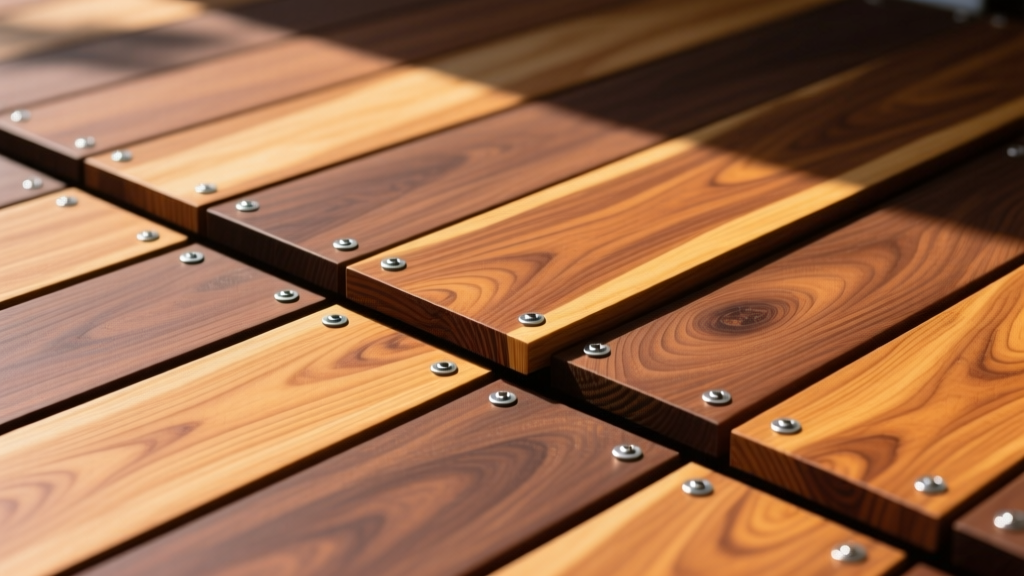
- Pre-Drilling is Non-Negotiable: Never attempt to drive a screw or nail directly into ultra-hard exotic woods. The shear strength of the wood fibers will snap standard fasteners. Pre-drill all pilot holes using cobalt or carbide-tipped drill bits. The pilot hole should match the shank diameter of the screw, while the clearance hole must be 1/16 inch oversize to allow for seasonal expansion.
- Fastener Metallurgy: The natural acids and oils in tropical hardwoods will rapidly corrode galvanized or zinc-plated steel, leading to unsightly black tannin streaks and eventual fastener failure. Specify Type 304 stainless steel for inland applications and Type 316 marine-grade stainless steel for coastal environments within 10 miles of saltwater.
- Gluing and Lamination: High resin content prevents standard PVA (yellow) wood glues from penetrating the cellular structure. Wipe all glue joints with acetone or denatured alcohol immediately before applying a two-part epoxy or a polyurethane-based adhesive (e.g., PL Premium or Titebond Polyurethane) to ensure a mechanical bond.
Finishing High-Density Timber
The very density that makes these woods hard also makes them difficult to finish. Film-forming topcoats like standard polyurethane often fail to adhere properly to oily exotics, leading to peeling and flaking within a single season.
| Finish Type | Best For | Application Protocol | Maintenance Cycle |
|---|---|---|---|
| Penetrating Tung/Ipe Oil | Exterior Decking (Ipe, Cumaru) | Solvent wipe, flood coat, wipe excess after 20 mins | Annual reapplication |
| UV-Cured Aluminum Oxide | Pre-finished Interior Flooring | Factory-applied via UV curing tunnels (not DIY) | 20+ years |
| Moisture-Cure Urethane | Oily Exotics (Rosewood, Teak) | Requires solvent prep; cures via ambient humidity | 5-7 years |
Sustainability and Trade Restrictions
Specifying the hardest woods requires strict adherence to international conservation laws. True Lignum Vitae (Guaiacum officinale) is listed on CITES Appendix II, heavily restricting its international trade due to overharvesting. Builders seeking the self-lubricating, ultra-dense properties of Lignum Vitae for marine or industrial applications must pivot to Argentinian Lignum Vitae (Bulnesia sarmientoi) or advanced UHMW (Ultra-High-Molecular-Weight) polyethylene composites. Always demand FSC or PEFC chain-of-custody documentation when importing Ipe or Cumaru to ensure the timber was not sourced from illegally deforested Amazonian tracts.
Species Selection Decision Matrix
Use this framework to select the correct hardwood species based on your specific project parameters:
- If the project is an exterior boardwalk or commercial deck: Choose FSC-certified Ipe. The upfront cost ($15/BF) is offset by a 50-year lifespan and zero requirement for chemical sealants.
- If the project is a residential deck with a strict budget: Choose Cumaru. It provides nearly identical hardness and rot resistance to Ipe, but requires more rigorous acclimation and annual oiling to maintain color.
- If the project is a high-traffic interior commercial floor (e.g., retail, restaurants): Choose True Hickory. Its 1,820 lbf Janka rating resists heel dents and dropped inventory, while its domestic sourcing eliminates import tariffs and supply chain delays.
- If the project requires heavy industrial shock absorption (e.g., gymnasiums, bowling alleys): Choose Hard Maple. Its uniform density and exceptional shock-dampening qualities protect athlete joints and withstand repetitive heavy impacts.
Written by
James ThorntonJames Thornton is a construction industry veteran with 25 years of hands-on experience in wood framing, lumber grading, and residential building codes. He started as a framing carpenter in rural Oregon, earned his ICC Residential Building Inspector certification, and eventually became a senior plan reviewer for the City of Portland Bureau of Development Services. James holds a B.S. in Wood Science & Technology from Oregon State University and is a certified lumber grader through the West Coast Lumber Inspection Bureau (WCLIB). He has inspected over 3,000 residential construction sites and authored the city's internal guide on advanced framing techniques (2x6 at 24" O.C.). James lives in Bend, OR, where he builds custom timber-frame cabins and competes in lumberjack sports.
More from James Thornton
View all
Insulation
Best Home Insulation Materials: Complete 2026 Guide
Compare top home insulation materials for 2026. Find R-values, installed costs per square foot, and best uses for fiberglass, spray foam, and mineral wool.
Aug 4, 2026

Sustainable Building
Certify Your Green Building Material for LEED and WELL
Step-by-step guide to certifying a green building material for LEED v5 and WELL v2. Master EPDs, HPDs, and VOC limits for 2026 project specifications.
Aug 4, 2026

Stone & Masonry
Veneer Stacked Stone Panels: Interior Design & Style Showcase
Discover how veneer stacked stone panels transform interiors. Explore modern design profiles, material pairings, and technical installation specs.
Aug 4, 2026