Wood Foundation Repair Cost by Species Guide 2026
See how wood species impact wood foundation repair cost. Compare 2026 pricing for pine, fir, and cedar, plus AWPA grade rules for below-grade structural fixes.
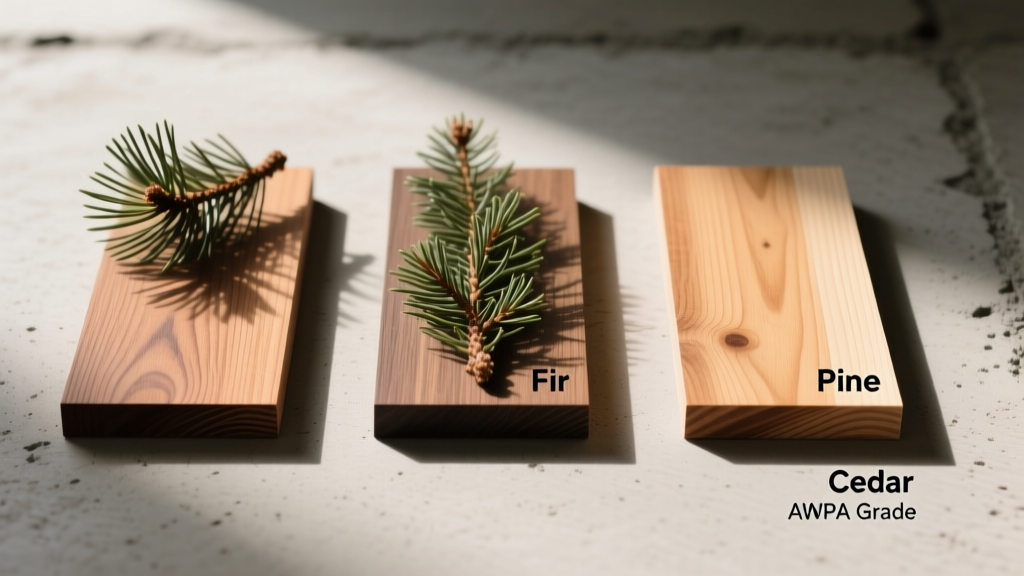
The Hidden Variable in Foundation Repair: Wood Species
When evaluating a compromised Permanent Wood Foundation (PWF) or timber pier system, most homeowners focus on excavation and labor. However, the primary driver of long-term structural viability—and a major component of the overall wood foundation repair cost—is the specific wood species used for the replacement timber. According to the American Wood Council, PWFs rely on the synergy between wood species anatomy, preservative retention levels, and below-grade moisture management. In 2026, material premiums for specific foundation-grade timbers fluctuate based on regional availability and American Wood Protection Association (AWPA) treatment standards. Repairing a legacy cedar foundation requires a vastly different budget and engineering approach than sistering a modern pressure-treated Southern Yellow Pine (SYP) wall.
Wood Foundation Repair Cost Matrix by Species
The table below outlines average 2026 material and labor costs for repairing a standard 40-linear-foot below-grade foundation wall section. Costs assume standard excavation, hydraulic shoring, and backfilling.
| Wood Species | AWPA Use Category | Material Cost (per BF) | Total Repair Cost (40ft Section) | Natural Decay Resistance |
|---|---|---|---|---|
| Southern Yellow Pine (PT) | UC4B / UC4C | $3.50 - $5.50 | $4,500 - $6,800 | Low (Relies on treatment) |
| Douglas Fir (PT) | UC4B | $6.00 - $8.50 | $7,200 - $9,500 | Low-Medium |
| Western Red Cedar (Legacy) | UC4A (Untreated) | $12.00 - $18.00 | $13,000 - $18,500 | High (Heartwood only) |
| Red Oak (Timber Piers) | UC4B | $8.00 - $11.00 | $9,000 - $12,500 | Low |
Species-Specific Repair Protocols & Pricing
Pressure-Treated Southern Yellow Pine (SYP)
SYP is the undisputed standard for modern PWF repairs. Its high sapwood-to-heartwood ratio allows for deep, uniform penetration of modern preservatives like Alkaline Copper Quaternary (ACQ) or Copper Azole (CA-C). For below-grade foundation repairs, the AWPA Book of Standards mandates a minimum of UC4B (Ground Contact, Fresh Water) or UC4C (Heavy Duty Ground Contact) retention levels.
Cost Factor: While the raw lumber is inexpensive, the hidden cost lies in fastener compatibility. The high copper content in modern ACQ treatments accelerates galvanic corrosion. Contractors must use hot-dipped galvanized (ASTM A153 Class D) or Type 304/316 stainless steel nails and anchor bolts. Upgrading a standard hardware budget to stainless steel adds roughly $350 to $500 to a 40-foot wall repair.
Douglas Fir and Hem-Fir
Douglas Fir is heavily utilized in the Pacific Northwest and mountainous regions for timber foundations and retaining walls. Unlike SYP, Douglas Fir heartwood is highly resistant to preservative penetration. To achieve UC4B ground-contact certification, the timber must be mechanically incised (punctured with small blades) before pressure treatment, which slightly reduces the structural modulus of elasticity (MOE).
Cost Factor: If your home features a legacy Douglas Fir foundation, matching the original 'Select Structural' grade for replacement sections is difficult and expensive. Expect to pay a 40% premium over SYP. Furthermore, because incised wood holds more surface moisture, epoxy consolidation repairs on decayed Douglas Fir sills often fail within 3 to 5 years; full section replacement is the only engineer-approved fix.
Heartwood Cedar and Redwood (Legacy Foundations)
Homes built in the 1960s and 1970s occasionally feature below-grade foundations made of old-growth Western Red Cedar or California Redwood. These species contain natural extractives (like thujaplicins in cedar) that act as potent fungicides. The USDA Forest Products Laboratory Wood Handbook notes that old-growth heartwood can survive decades in direct soil contact without chemical treatment.
Cost Factor: Modern second-growth cedar lacks the dense heartwood and extractive concentration of old-growth timber. Sourcing true foundation-grade, all-heartwood cedar in 2026 is exceptionally rare and costly. Most structural engineers advise against replacing rotten cedar sections with new cedar. Instead, the standard protocol is to transition the repair zone to UC4C-treated SYP, separated from the remaining cedar by a physical peel-and-stick waterproofing membrane to prevent moisture wicking and galvanic reactions.
If your home was built before 2004, the existing wood foundation was likely treated with Chromated Copper Arsenate (CCA). Sistering new ACQ-treated pine directly against old CCA-treated pine using standard carbon-steel bolts will result in severe galvanic corrosion within 24 months. Always isolate dissimilar preservative treatments with a 30-mil polyethylene barrier or use strictly Type 316 stainless steel through-bolts.
Labor vs. Material: Where Your Budget Actually Goes
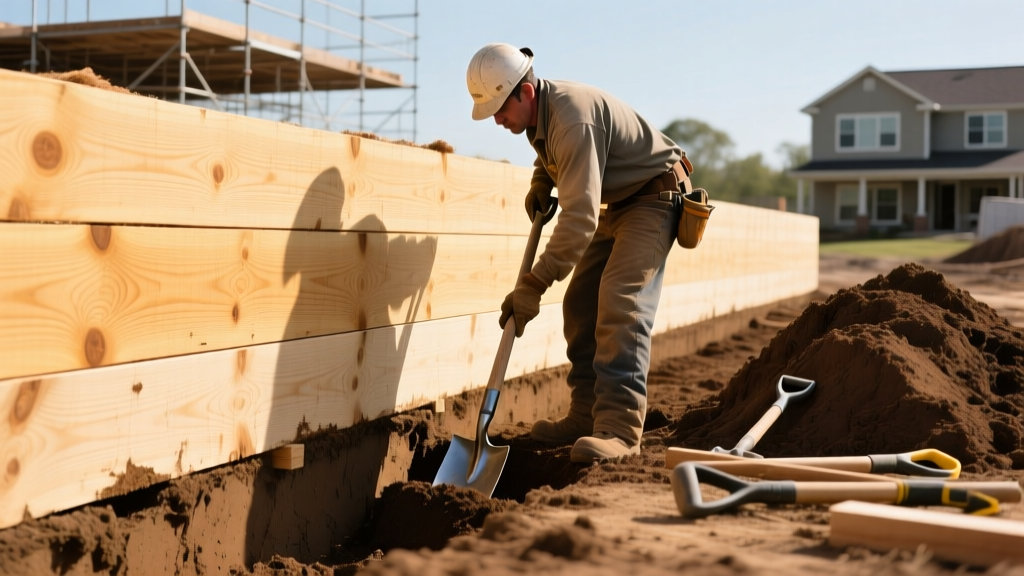
When analyzing a wood foundation repair quote, material costs typically account for only 20% to 30% of the total invoice. The remaining 70% to 80% is driven by below-grade logistics. The primary labor cost drivers include:
- Excavation and Shoring ($45 - $85 per linear foot): Digging a trench to expose the foundation footer while maintaining a 45-degree angle of repose to prevent cave-ins. Trench boxes or hydraulic shoring are legally required in trenches deeper than 5 feet.
- Hydraulic Jacking and Load Transfer ($1,200 - $2,500 per zone): Temporarily supporting the floor joist system with lally columns and spread footings before cutting out the decayed foundation stud or sill plate.
- Waterproofing Integration ($8 - $12 per square foot): Applying a bituminous dampproofing layer and dimpled drainage mat (like Delta-MS) over the repaired wood section before backfilling with washed gravel.
- Backfill and Compaction ($25 - $40 per cubic yard): Using free-draining 3/4-inch crushed stone in the lower 12 inches of the trench to maintain the capillary break essential for PWF longevity.
Decision Framework: Repair, Reinforce, or Replace?
Not every compromised timber requires full extraction. Use this diagnostic framework to determine the correct intervention level based on the extent of brown rot or white rot decay:
- The Awl Probe Test: Press a standard steel awl into the suspected timber. If it penetrates deeper than 1/4 inch with moderate hand pressure, the structural fibers are compromised beyond the point of epoxy consolidation.
- Moisture Meter Thresholds: Use a pin-type moisture meter. Readings consistently above 20% in below-grade timbers indicate active fungal environments. If the wood is wet but structurally sound, exterior drainage correction (regrading and French drains) is the fix, not timber replacement.
- Sistering (Reinforcement): If decay is localized to the top 12 inches of a foundation stud (often caused by splashback or failed flashing), you can cut out the rotted section and sister a new UC4B-treated SYP stud alongside the existing one, bolted with structural timber screws (e.g., Simpson Strong-Tie SDWS). This saves roughly 40% on labor compared to full wall replacement.
- Full Section Swap (Replacement): If the bottom plate (sole plate) or the lower 24 inches of the plywood sheathing are delaminating or soft, the entire load path is broken. The floor must be jacked, the wall section removed, and a new pre-assembled PWF panel dropped into place.
Sourcing and Grade Requirements for 2026
When ordering replacement lumber for a wood foundation, standard 'Ground Contact' labels at big-box retailers are insufficient for structural PWF walls. You must specify Foundation Grade or Select Structural stampings. Foundation Grade lumber is specifically graded for the high bending stresses and shear forces associated with soil backfill pressure.
Due to supply chain shifts in 2026, UC4C heavy-duty treated timbers often require a 3-to-4 week lead time from regional treating plants. Always verify the AWPA end-tags on every piece of lumber delivered to your site. The tag must explicitly state the retention level (e.g., 0.60 pcf for CA-C) and the Use Category. Installing UC4A (Above Ground) treated wood below grade due to a misread end-tag will result in catastrophic rot within 7 to 10 years, voiding all structural warranties and requiring a complete secondary excavation.
Written by
David NakamuraDavid Nakamura is a licensed architect (AIA) and construction technology writer focused on sustainable building methods, mass timber engineering, and high-performance building envelopes. He holds a Master of Architecture from the University of Washington and is a certified Passive House Consultant (CPHC). David spent eight years at the Seattle firm Mithun, where he led the design of three LEED Platinum projects, before founding his own practice specializing in net-zero residential design. He serves on the editorial advisory board of GreenBuilder Magazine and has authored peer-reviewed papers on cross-laminated timber (CLT) connections for the Journal of Structural Engineering. In his spare time, David teaches woodworking at Pratt Fine Arts Center and kayaks the Puget Sound.
More from David Nakamura
View all
Construction Cost
Labor Cost to Build a Deck Per Sq Ft: 2026 Installation Guide
Discover the exact labor cost to build a deck per sq ft in 2026. This installation guide breaks down contractor rates, complexity factors, and hidden fees.
Aug 4, 2026

Construction Cost
How Much Does It Cost to Build a 3 Bedroom House? Financing Guide
Learn exactly how much it costs to build a 3 bedroom house and explore 2026 financing options, construction loan types, and budget frameworks for your build.
Aug 4, 2026

Construction Cost
Cost to Build a Tennis Court: 2026 Guide
How much does it cost to build a tennis court in 2026? Breakdowns for asphalt, concrete, and synthetic surfaces plus fencing and lighting.
Jul 30, 2026