How Much Does It Cost to See Empire State Building in 2026?
Discover how much it costs to see Empire State Building in 2026. Compare ticket tiers, regional NYC observatory prices, and facility maintenance costs.
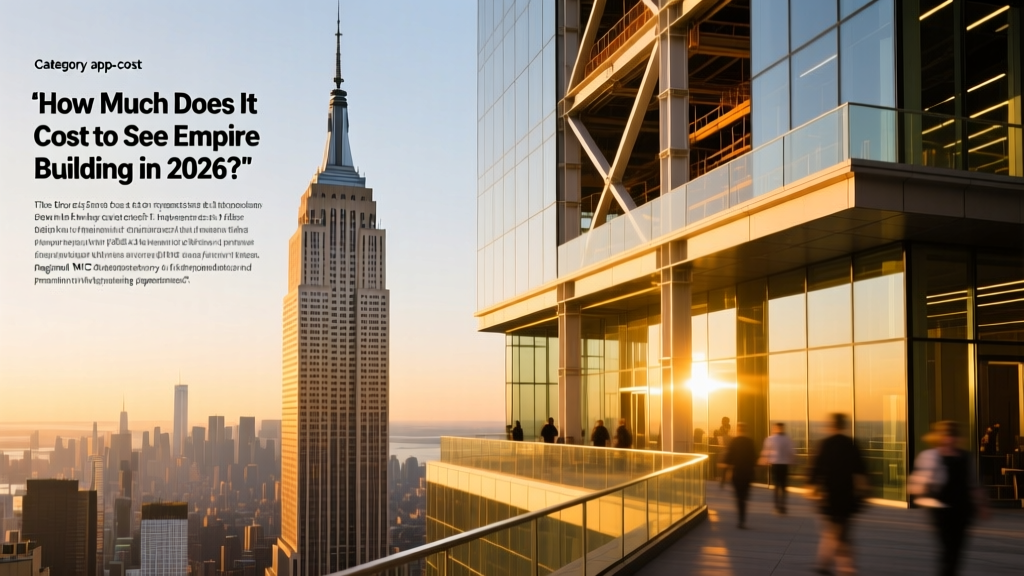
2026 Admission Tiers: Breaking Down the Base Costs
When evaluating how much does it cost to see empire state building, the answer depends entirely on the elevation and experience tier you select. As of 2026, the Empire State Building (ESB) Observatory operates on a dynamic pricing model, meaning tickets fluctuate based on the season, day of the week, and time of day. However, baseline standard admissions have stabilized into distinct tiers that cater to different budget constraints and architectural interests.
Unlike standard commercial real estate where cost-per-square-foot dictates value, the ESB prices its access based on view corridors, historical exhibit integration, and wind-load engineered glass enclosures. Below is the current 2026 pricing matrix for standard adult admissions.
| Observation Tier | Adult Price (2026) | Child Price (6-12) | Elevation & Material Features |
|---|---|---|---|
| Main Deck (86th Floor) | $48.30 | $42.15 | Open-air Art Deco promenade; original 1931 limestone and aluminum railings. |
| Top Deck (102nd Floor) | $88.50 | $82.00 | Climate-controlled; floor-to-ceiling low-iron ultra-clear glass panels. |
| Express Pass (Both Decks) | $138.00 | $125.00 | Bypasses standard security and elevator queues; includes both elevations. |
| Premium Sunrise Experience | $150.00+ | N/A (18+ only) | Pre-opening access; includes guided architectural history tour and coffee. |
Regional NYC Observatory Price Analysis
To understand the true market value of the ESB tickets, we must contextualize them against regional competitors in Manhattan's commercial skyscraper observation market. The construction and maintenance costs of these facilities directly influence their ticket prices.
- Top of the Rock (Rockefeller Center): General admission hovers around $45-$55. While cheaper, the 70th-floor elevation is significantly lower, and the structural glass used in the 'Beam' experience is standard laminated safety glass, lacking the ultra-clear optical properties of newer builds.
- Edge at Hudson Yards: Priced between $40-$60. Edge features a cantilevered steel and glass platform. The engineering costs for the post-tensioned concrete and structural steel cantilever are immense, but the outdoor deck is smaller in total square footage than the ESB's 86th-floor wrap-around promenade.
- One World Observatory: Tickets range from $50-$75. Located entirely indoors on the 100th+ floors, the HVAC and pressurization costs for this enclosed environment are substantial, but it lacks the open-air tactile experience of the ESB.
Compared to these regional alternatives, the Empire State Building commands a slight premium for the 102nd-floor Top Deck, justified by its recent $165 million observatory redevelopment which integrated museum-grade exhibits and advanced building materials.
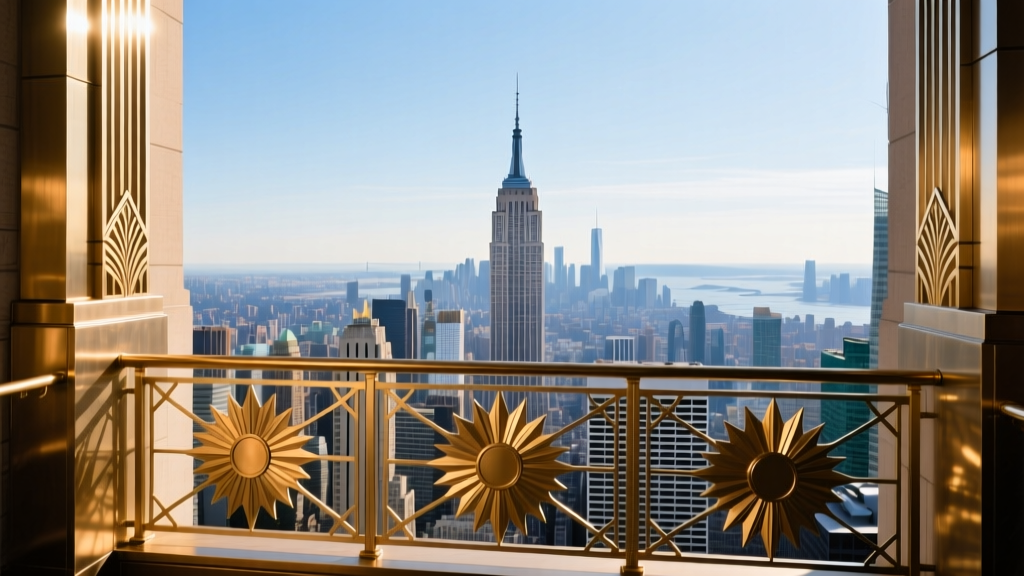
The Construction Economics: Why the Premium Price?
As a platform dedicated to building materials and construction cost estimating, it is vital to look behind the ticket scanner. The cost to visit the ESB is heavily subsidized by the ongoing material maintenance and historical preservation of the structure. The original 1931 construction cost was $40.9 million (roughly $800 million adjusted for inflation). However, the recent 2011-2020 observatory overhaul required specialized materials that drive up operational overhead.
Specialty Materials on the 102nd Floor
The 102nd-floor Top Deck was completely gutted and rebuilt to feature floor-to-ceiling glass. Standard architectural glass has a green tint due to iron oxide content. To provide unobstructed, true-color views of the Manhattan skyline, engineers specified low-iron ultra-clear glass (similar to Starphire or Optiwhite specifications). This material costs up to 30% more per square foot than standard low-E commercial glazing. Furthermore, the custom extruded bronze-finished stainless steel mullions required specialized fabrication to match the building's original Art Deco aesthetic while meeting modern ASTM wind-load and thermal expansion standards.
High-Traffic Flooring and Wear Resistance
The 86th-floor Main Deck processes over 1.5 million visitors annually. Standard commercial tile or polished concrete would degrade rapidly under this level of foot traffic combined with New York's freeze-thaw cycles and de-icing salts. The ESB utilizes heavy-duty epoxy terrazzo flooring in its interior queue and transition zones. Poured-in-place epoxy terrazzo costs between $25 and $45 per square foot installed, but its lifecycle cost is virtually zero, requiring only diamond-pad polishing during annual maintenance closures.
'The integration of modern, high-performance building envelopes into a 1930s masonry and steel superstructure requires bespoke engineering. The ticket price reflects not just a view, but the amortization of a $165 million architectural restoration.' — The Skyscraper Museum
Strategic Booking Framework: Maximizing Your ROI
Knowing how much it costs to see Empire State Building is only half the equation; knowing which ticket provides the best return on investment (ROI) is the other. Use this decision matrix to select your tier:
Choose the Main Deck (86th Floor) If:
- You are an architectural photography enthusiast who wants access to the open-air promenade to shoot the Chrysler Building without window glare.
- You are traveling with a large family and need to cap per-capita entertainment costs under $50.
- You want to physically feel the wind and hear the ambient city noise, which is blocked by the acoustic dampening of the upper indoor decks.
Choose the Top Deck (102nd Floor) If:
- You are visiting during winter months (December-March). The 86th floor can be brutally cold and windy, whereas the 102nd floor is fully climate-controlled with radiant floor heating elements near the perimeter glass.
- You prioritize optical clarity and want to see the curvature of the earth and the distant borders of Connecticut and New Jersey without the haze interference common at lower elevations.
Hidden Regional Costs: Transit and Logistics
When budgeting for your visit, factor in the regional transit costs to reach 350 Fifth Avenue. The ESB does not have dedicated visitor parking, and commercial parking garages in the Midtown Manhattan zone average $45 to $65 for a two-hour stay.
The Cost-Effective Transit Route:
Utilize the MTA Subway system. The PATH train to 33rd Street or the B/D/F/M/N/Q/R/W lines to 34th Street-Herald Square place you within a three-block walking radius. The 2026 OMNY fare cap system ensures that if you are spending multiple days touring NYC construction landmarks and museums, your transit costs will cap at $34 per week, drastically reducing the logistical overhead of your trip.
For comprehensive tourism planning and regional attraction bundles, you can cross-reference transit and ticket packages via NYC Tourism + Conventions. Bundling the ESB with a hop-on-hop-off transit pass or a regional museum pass can effectively reduce the net cost of the 102nd-floor upgrade by up to 25%.
Frequently Asked Questions
Are there any free ways to see the building's architecture?
While accessing the observation decks requires a paid ticket, the ground-floor Art Deco lobby is free to enter during business hours. The lobby features a $15 million restoration completed in 2009, including 24-karat gold leaf ceiling murals and original Belgian marble wainscoting. This provides a high-value architectural experience at zero cost.
Do I need to pay extra for the sustainability exhibits?
No. The ESB's world-renowned green retrofit exhibits—which detail the $550 million building-wide energy efficiency overhaul, including custom remanufactured windows and radiator insulation—are included in all base ticket prices. These exhibits are a goldmine for construction professionals studying LEED-certified commercial retrofits.
Is the Top Deck accessible for wheelchairs?
Yes. The 2020 redesign of the 102nd floor specifically incorporated ADA-compliant ramps and lowered the window mullion sightlines so that seated visitors have an unobstructed view of the skyline. The elevator upgrades also included tactile flooring and braille signage compliant with current federal accessibility standards.
Written by
James ThorntonJames Thornton is a construction industry veteran with 25 years of hands-on experience in wood framing, lumber grading, and residential building codes. He started as a framing carpenter in rural Oregon, earned his ICC Residential Building Inspector certification, and eventually became a senior plan reviewer for the City of Portland Bureau of Development Services. James holds a B.S. in Wood Science & Technology from Oregon State University and is a certified lumber grader through the West Coast Lumber Inspection Bureau (WCLIB). He has inspected over 3,000 residential construction sites and authored the city's internal guide on advanced framing techniques (2x6 at 24" O.C.). James lives in Bend, OR, where he builds custom timber-frame cabins and competes in lumberjack sports.
More from James Thornton
View all
Insulation
Best Home Insulation Materials: Complete 2026 Guide
Compare top home insulation materials for 2026. Find R-values, installed costs per square foot, and best uses for fiberglass, spray foam, and mineral wool.
Aug 4, 2026

Sustainable Building
Certify Your Green Building Material for LEED and WELL
Step-by-step guide to certifying a green building material for LEED v5 and WELL v2. Master EPDs, HPDs, and VOC limits for 2026 project specifications.
Aug 4, 2026

Stone & Masonry
Veneer Stacked Stone Panels: Interior Design & Style Showcase
Discover how veneer stacked stone panels transform interiors. Explore modern design profiles, material pairings, and technical installation specs.
Aug 4, 2026