How Much Does It Cost to Build a Cruise Ship? 2026 Breakdown
Discover how much it costs to build a cruise ship in 2026. Explore hull, outfitting, and labor expenses alongside proven money-saving construction strategies.
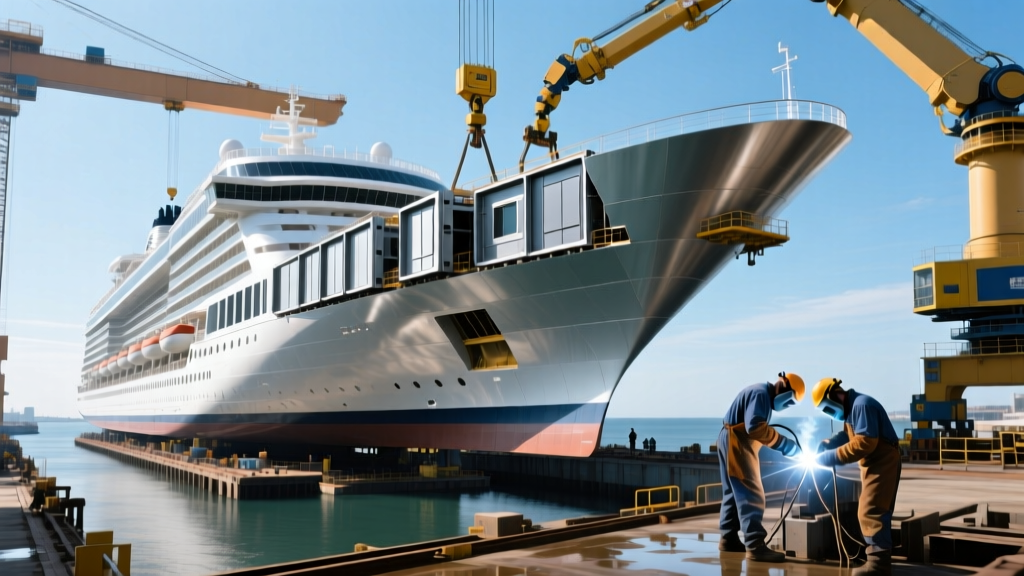
The True Price Tag: How Much Does It Cost to Build a Cruise Ship?
When maritime executives and investors ask, "how much does it cost to build a cruise ship?", the answer requires dissecting one of the most complex capital expenditure (CapEx) projects in modern engineering. As of 2026, the cost to construct a cruise vessel ranges from $550 million for a specialized mid-size expedition ship to over $2.2 billion for a next-generation, LNG-powered mega-ship. However, raw totals obscure the financial mechanics at play. The true metric shipyards and cruise lines use to benchmark efficiency is the cost per Gross Ton (GT) and cost per Lower Berth.
2026 Industry Benchmark Data
- Average Cost per Gross Ton: $6,800 to $9,500
- Average Cost per Lower Berth: $220,000 to $310,000
- Typical Construction Timeline: 36 to 48 months from steel cutting to sea trials
CapEx Breakdown by Ship Class
The financial outlay scales non-linearly with size. Mega-ships benefit from economies of scale in propulsion and crew infrastructure, but their outfitting costs skyrocket due to the inclusion of massive entertainment complexes and specialized dining venues.
| Ship Class | Gross Tonnage (GT) | 2026 Est. CapEx | Cost per GT | Example Vessel |
|---|---|---|---|---|
| Mega-Ship (LNG) | 200,000 - 250,000 | $1.6B - $2.2B | $8,500 - $9,500 | Royal Caribbean Icon Class |
| Mainstream Mid-Size | 120,000 - 150,000 | $850M - $1.1B | $7,000 - $7,800 | Carnival Excel Class |
| Premium / Luxury | 50,000 - 80,000 | $600M - $900M | $10,000 - $12,500 | Silversea Evolution Class |
| Expedition | 10,000 - 30,000 | $250M - $550M | $15,000 - $22,000 | Seabourn Venture |
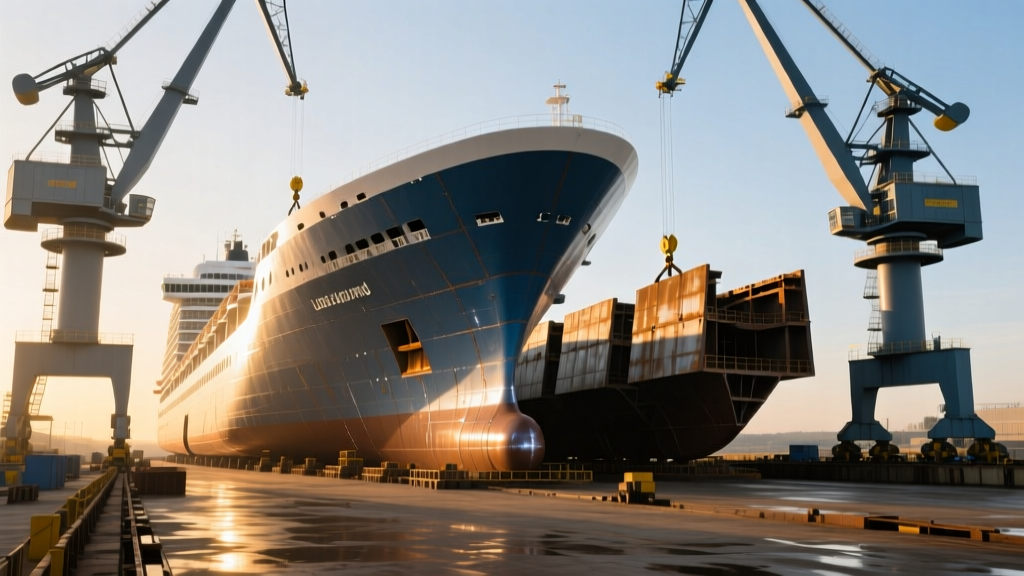
Where the Money Goes: The 60/40 Rule of Shipbuilding
To understand how to save money, you must understand where it is spent. Cruise ship construction is governed by the 60/40 rule: approximately 40% of the budget is consumed by the hull, steel, and heavy machinery (propulsion, HVAC, power generation), while 60% is dedicated to outfitting, interiors, and passenger-facing technology.
Steel and Hull Fabrication (15-20%)
A mega-ship requires 30,000 to 45,000 metric tons of steel. Shipyards predominantly use AH36 high-tensile shipbuilding steel to reduce hull weight without sacrificing structural integrity. With 2026 global steel prices fluctuating between $750 and $900 per metric ton, raw material costs for the hull alone can exceed $35 million before a single block is welded.
Propulsion and Machinery (20-25%)
Modern environmental regulations have fundamentally altered propulsion costs. Transitioning from heavy fuel oil (HFO) to dual-fuel LNG engines requires the installation of specialized Type C cryogenic tanks and complex fuel-gas supply systems. According to classification society DNV, an LNG dual-fuel setup adds 12% to 15% to the initial machinery CapEx compared to traditional scrubber-equipped diesel engines.
Outfitting and Interiors (50-60%)
This is the primary area where cruise lines execute money-saving strategies. Outfitting includes everything from plumbing and electrical routing to custom carpets, theatrical rigging, and cabin furniture. Labor intensity in this phase is immense, requiring thousands of specialized tradespeople working simultaneously in confined spaces.
4 Proven Money-Saving Strategies in Modern Cruise Construction
Cruise lines operating on thin margins cannot afford CapEx overruns. By analyzing recent orderbooks from Fincantieri and other major yards, four distinct cost-mitigation strategies emerge.
Strategy 1: Platform Standardization and Sister Ships
The most effective way to reduce engineering and tooling costs is to build multiple ships on the exact same hull platform. When Carnival Corporation ordered the Excel-class ships across three different brands (Carnival, Costa, P&O), they utilized a standardized 180,000 GT hull design. The Savings: Standardization reduces naval architecture and engineering costs by up to 18% on the second and third sister ships, as the digital twins, structural stress models, and supply chain logistics are already fully optimized.
Strategy 2: Prefabricated Turnkey Cabin Pods
Instead of building cabins inside the ship's hull, modern shipyards use prefabricated modular cabin pods. These 25-square-meter units are constructed in off-site factories (often in Eastern Europe or specialized Asian facilities), fully outfitted with plumbing, wiring, beds, and bathroom fixtures, and then shipped to the drydock. They are lifted by crane and slid into the ship's superstructure like drawers in a cabinet. The Savings: A standard balcony cabin pod costs between $45,000 and $65,000 to produce off-site. This method reduces onboard outfitting labor time by 30% and virtually eliminates costly rework caused by working in cramped, poorly lit hull spaces.
Strategy 3: Value Engineering in Public Spaces
Passengers perceive luxury through design, not necessarily through raw material mass. Shipyards are increasingly substituting heavy, expensive natural materials with advanced composites. For example, using high-definition digital signage and dynamic LED lighting arrays instead of physical art installations and complex architectural millwork reduces both material costs and structural weight. The Savings: Replacing natural marble flooring in main dining rooms with large-format, high-durability porcelain slabs or engineered quartz reduces flooring material costs by 60% and lowers the ship's center of gravity, marginally improving fuel efficiency.
Strategy 4: Strategic Shipyard Diversification
Historically, European shipyards (Meyer Werft, Fincantieri, Chantiers de l'Atlantique) held a monopoly on complex cruise ship construction, allowing them to command premium prices. To force price competition, cruise lines are actively diversifying their orderbooks to include Asian shipyards. China State Shipbuilding Corp (CSSC) has entered the market, offering labor rates that are 25% to 35% lower than European counterparts. The Savings: While owner oversight and quality control costs increase when building in emerging yards, the net CapEx reduction on a mid-size vessel can exceed $100 million. Financial disclosures from Royal Caribbean Group Investor Relations frequently highlight the importance of negotiating shipyard contracts to manage long-term capital deployment.
The Hidden Costs: Change Orders and Supply Chain Delays
Even with rigorous money-saving strategies, CapEx estimates frequently balloon due to hidden costs. The most destructive of these is the "change order"—modifications requested by the cruise line after the steel cutting has begun. Moving a single stairwell or altering the HVAC routing after a block has been assembled can cost hundreds of thousands of dollars in rework and delay the critical path schedule.
"In cruise ship construction, a one-week delay in the drydock due to supply chain bottlenecks—such as waiting for specialized Azipod propulsion units or custom theatrical rigging—can cost the cruise line up to $2 million in lost revenue and penalty clauses. Locking in the design at the 90% 3D model review is the ultimate money-saving tactic."
Furthermore, the 2026 regulatory landscape, specifically the inclusion of maritime shipping in the EU Emissions Trading System (EU ETS), means that failing to invest in energy-efficient hull air lubrication systems or advanced waste heat recovery systems during construction will result in massive operational penalties once the ship enters service. Saving money on the front end by omitting green technology is a false economy that destroys long-term ROI.
Expert Verdict: Optimizing the CapEx
Understanding how much it costs to build a cruise ship requires looking beyond the headline billion-dollar figures. The most financially successful cruise lines in 2026 are those that treat ship construction as a manufacturing process rather than a bespoke architectural project. By leveraging platform standardization, utilizing off-site prefabricated cabin modules, and rigorously freezing designs before steel cutting, operators can shave 10% to 15% off their CapEx. In an industry where a single mega-ship costs upwards of $2 billion, a 10% savings translates to $200 million—capital that can be immediately redeployed into marketing, itinerary development, or debt reduction.
Written by
James ThorntonJames Thornton is a construction industry veteran with 25 years of hands-on experience in wood framing, lumber grading, and residential building codes. He started as a framing carpenter in rural Oregon, earned his ICC Residential Building Inspector certification, and eventually became a senior plan reviewer for the City of Portland Bureau of Development Services. James holds a B.S. in Wood Science & Technology from Oregon State University and is a certified lumber grader through the West Coast Lumber Inspection Bureau (WCLIB). He has inspected over 3,000 residential construction sites and authored the city's internal guide on advanced framing techniques (2x6 at 24" O.C.). James lives in Bend, OR, where he builds custom timber-frame cabins and competes in lumberjack sports.
More from James Thornton
View all
Insulation
Best Home Insulation Materials: Complete 2026 Guide
Compare top home insulation materials for 2026. Find R-values, installed costs per square foot, and best uses for fiberglass, spray foam, and mineral wool.
Aug 4, 2026

Sustainable Building
Certify Your Green Building Material for LEED and WELL
Step-by-step guide to certifying a green building material for LEED v5 and WELL v2. Master EPDs, HPDs, and VOC limits for 2026 project specifications.
Aug 4, 2026

Stone & Masonry
Veneer Stacked Stone Panels: Interior Design & Style Showcase
Discover how veneer stacked stone panels transform interiors. Explore modern design profiles, material pairings, and technical installation specs.
Aug 4, 2026