2026 Regional Labor Cost to Build a Carport Analysis
Discover the 2026 regional labor cost to build a carport. Compare hourly rates, total installation prices, and hidden fees across US states.
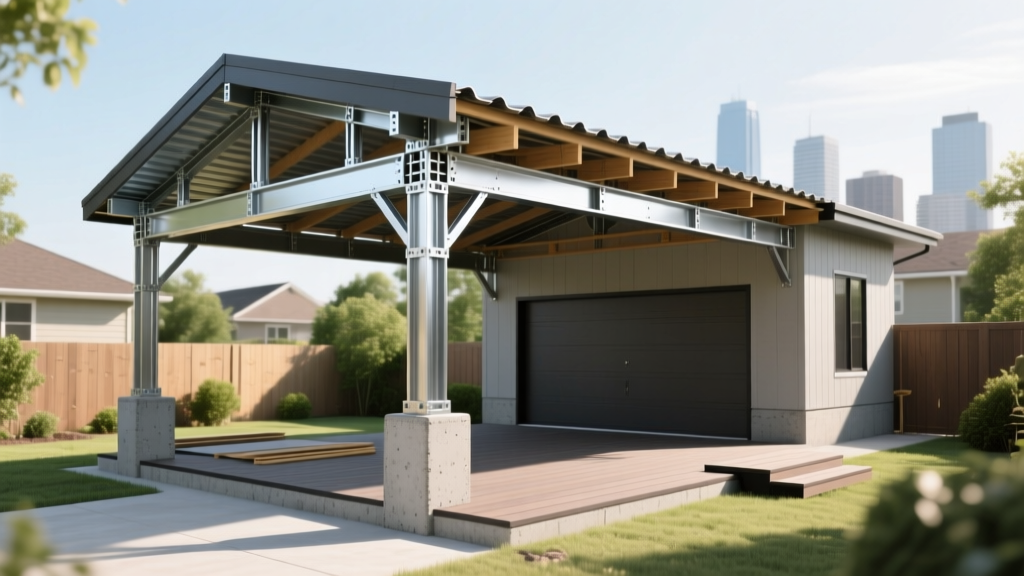
The True Breakdown of Carport Labor Rates in 2026
The national average labor cost to build a carport in 2026 ranges from $850 to $3,200, but treating this as a flat national metric is a critical estimating error. Labor rates, site preparation requirements, and local building code enforcement vary drastically by ZIP code. A 20x20 detached steel carport installed in Miami-Dade County requires vastly different anchoring labor and wind-load bracing than the exact same kit installed in rural Ohio. According to the Bureau of Labor Statistics, carpenter and structural ironworker wages have continued to climb, pushing the baseline hourly rate for skilled carport installers to between $45 and $85 per hour nationally.
2026 National Labor Baseline Data
- Average Hourly Rate: $45 - $85 per hour per installer
- Average Crew Size: 2 to 3 professionals
- Typical Build Time (20x20 Detached): 14 to 28 man-hours
- Permit Pulling & Inspection Labor: 2 to 4 billable hours
Regional Labor Cost Matrix: Where Does Your State Rank?
Regional disparities in the labor cost to build a carport are driven by three primary factors: prevailing union wages, local frost-line depth requirements, and municipal wind/seismic codes. The following matrix breaks down expected labor costs for a standard 20x20 detached structure (excluding materials and concrete pouring).
| Region | Avg Hourly Rate | 20x20 Metal Kit Labor | 20x20 Wood Frame Labor | Primary Labor Driver |
|---|---|---|---|---|
| Northeast | $65 - $95 | $1,400 - $2,100 | $2,800 - $4,200 | Deep frost-depth footings, union prevailing wages |
| Southeast | $40 - $60 | $900 - $1,400 | $1,900 - $2,800 | Hurricane wind-load anchoring, high water table excavation |
| Midwest | $45 - $70 | $1,000 - $1,600 | $2,200 - $3,400 | Deep frost lines requiring sonotube labor |
| West Coast | $70 - $110 | $1,600 - $2,600 | $3,200 - $5,000 | Seismic bracing, strict municipal inspection delays |
| Southwest | $45 - $65 | $950 - $1,500 | $2,000 - $3,000 | Caliche soil excavation, monolithic slab prep |
As highlighted in industry benchmarking reports by Gordian RSMeans, regional code enforcement can add up to 25% in hidden labor costs. For example, in Florida, Miami-Dade Notice of Acceptance (NOA) wind-load requirements mandate specific anchor spacing (often 48 inches on center instead of the standard 72 inches), increasing drilling and epoxy-setting labor by nearly a third compared to inland installations.
Material-Specific Man-Hour Variances
The material you select dictates the complexity of the assembly, directly impacting the total man-hours billed by your contractor. While material costs are often the focus of estimates, the labor multiplier is where budgets frequently blow up.
Pre-Engineered Steel Tube Kits (e.g., VersaTube, Arrow)
Steel kits are designed for rapid assembly using slip-fit connections and self-drilling tek screws. A trained two-person crew can typically frame and roof a 20x20 steel carport in 12 to 16 hours. The primary labor bottleneck here is squaring the frame before tightening the final bolts; if the base rails are out of square by even half an inch, the pre-punched roof purlins will not align, adding 3 to 4 hours of corrective labor.
Post-Frame Wood Construction
Wood carports require traditional carpentry skills: cutting, notching, temporary bracing, and custom fitting. Expect a post-frame wood carport to require 24 to 32 man-hours. The labor cost to build a carport out of wood is inherently higher because every truss must be individually hoisted, plumbed, and secured with hurricane ties, and the roof decking (if using plywood instead of metal panels) adds an additional 6 to 8 hours of cutting and nailing.
Extruded Aluminum Systems
Aluminum carports are lightweight and resist corrosion, making them popular in coastal regions. However, aluminum is highly susceptible to warping if over-torqued. Installers must use specialized torque-limiting drill attachments, which slows down the fastening process. Expect 14 to 18 man-hours for a standard 20x20 aluminum structure.
The Foundation Labor Trap: Site Prep and Anchoring
According to Angi's comprehensive carport cost guide, foundation work is the most common source of contractor change orders. The labor required to secure the carport to the ground is entirely dependent on your local soil composition and frost line.
In northern states like Minnesota, the frost line sits at 60 inches. Digging 5-foot deep sonotube holes for six posts requires heavy auger equipment and adds 8 to 12 hours of labor. In contrast, southern states utilize surface-level concrete collars or mobile-home style earth anchors, which can be installed in just 4 to 6 man-hours. Always verify your local frost depth before approving a foundation labor quote.
Labor Hours by Foundation Type (20x20 Carport):
- Monolithic Concrete Slab (4-inch thick, 4000 PSI): 16 to 24 man-hours. Includes forming, grading, laying a 6-mil vapor barrier, tying a #4 rebar grid on 24-inch centers, and screeding. Note that this does not include the concrete truck wait time, which is usually billed at a premium if delayed.
- Sonotube Frost Footings: 12 to 18 man-hours. Involves augering holes below the frost line, setting cardboard tubes, inserting rebar cages, and pouring concrete. The carport posts are then anchored to wet-set post bases or drilled into cured concrete using wedge anchors.
- Auger-Style Earth Anchors (Dirt/Gravel Base): 4 to 6 man-hours. Used primarily for temporary or agricultural carports. Crews drive 30-inch steel auger anchors into the soil using a post driver or skid-steer attachment, then bolt the base rail directly to the anchor head.
Hidden Labor Multipliers: Permitting and Inspections
Contractors rarely include the administrative labor of pulling permits in their base installation quote. In highly regulated municipalities (such as those in California, New York, and Illinois), the labor cost to build a carport must include a 15% to 20% buffer for compliance overhead. This covers the hours spent drafting site plans, submitting structural engineering stamps for wind-load ratings, and physically waiting on-site for municipal inspectors to approve the footing depth before concrete can be poured. If an inspector fails a footing due to improper bell-shaping at the base of the hole, the crew must return to excavate further, resulting in double-dipping on labor charges.
Strategic Framework: Hiring Local vs. Regional Crews
When evaluating bids for the labor cost to build a carport, prioritize contractors who hold specific local structural licenses over out-of-town 'storm chaser' crews. Regional crews understand local soil expansiveness and micro-climate wind tunnels, preventing catastrophic uplift failures that generic installers often overlook.
Decision Matrix for Contractor Selection:
- Choose Local Specialty Carpenters When: You are building a custom wood-frame carport attached to an existing structure, requiring complex ledger-board flashing and integration with your home's roof drainage system.
- Choose Regional Franchise Installers When: You are installing a pre-engineered steel or aluminum kit on a flat, pre-poured concrete slab. These crews operate on volume and can complete bolt-together assemblies 30% faster than general contractors.
- Avoid Unlicensed Handymen When: Your municipality requires engineered wind-load certifications (e.g., coastal Florida, the Carolinas, or the Gulf Coast). A failed inspection will result in a demolition order, rendering your initial labor investment a total loss.
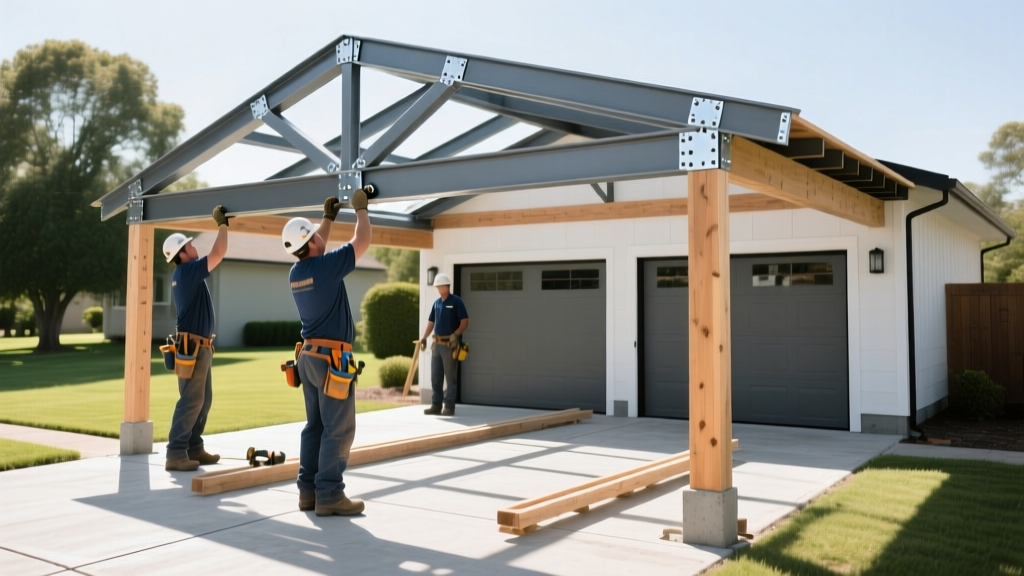
Frequently Asked Questions
Does the labor cost to build a carport include the removal of an existing structure?
No. Demolition and haul-away labor is billed separately. Tearing down an existing 20x20 wood carport, cutting the timbers, loading the debris, and paying local landfill tipping fees typically adds $400 to $800 in labor and disposal costs.
How does attaching a carport to a house affect labor costs?
Attached carports require 4 to 8 additional man-hours compared to detached structures. This extra labor accounts for safely removing existing siding, installing a structural ledger board with lag bolts into the home's rim joist, and integrating aluminum flashing to prevent water intrusion at the seam.
Are there seasonal fluctuations in carport installation labor rates?
Yes. In northern climates, scheduling a carport installation during the late fall or early spring can reduce labor costs by 10% to 15%, as contractors offer off-peak discounts to keep their crews employed between the busy summer decking season and the winter shutdown.
Written by
Sarah WhitfieldSarah Whitfield is a chartered quantity surveyor (MRICS) and construction cost analyst with 15 years of experience in material pricing, procurement strategy, and project budgeting. She earned her degree in Construction Management from the University of Reading (UK) and has worked on projects ranging from $2M custom homes to $180M mixed-use developments across North America and Europe. Sarah currently leads cost estimating for BuildMat Insight, maintaining a proprietary database of 4,000+ material price points updated quarterly. She is a frequent contributor to RSMeans cost data panels and has presented at the International Cost Engineering Council (ICEC) congress. Based in Denver, CO, Sarah is an avid trail runner and volunteer mentor for Women in Construction.
More from Sarah Whitfield
View all
Wood & Lumber
What Are the Different Types of Wood? A Builder's Guide
Compare structural softwoods, finish hardwoods, and engineered lumber. Analyze Janka ratings, MOE values, and 2026 pricing for construction.
Aug 4, 2026

Walls & Panels
Steel Framing vs Wood Framing: Corrosion and Moisture Defense
Compare steel framing vs wood framing for moisture resistance. Learn about galvanized coatings, condensation risks, and corrosion protection strategies.
Jul 21, 2026

Stone & Masonry
How to Cut Stone Veneer: Wet Saw vs Grinder Comparison
Compare the best tools for cutting stone veneer. We review wet saws, angle grinders, and chop saws to help you achieve clean, chip-free cuts.
Jul 21, 2026