What Is Slate Roofing Material? A Buyer's Guide to Grades, Costs, and Lifespan
Discover what slate roofing material is, including ASTM grades, regional origins, structural weight requirements, and 2026 installation costs.
Defining Slate Roofing Material: Geology and Manufacturing
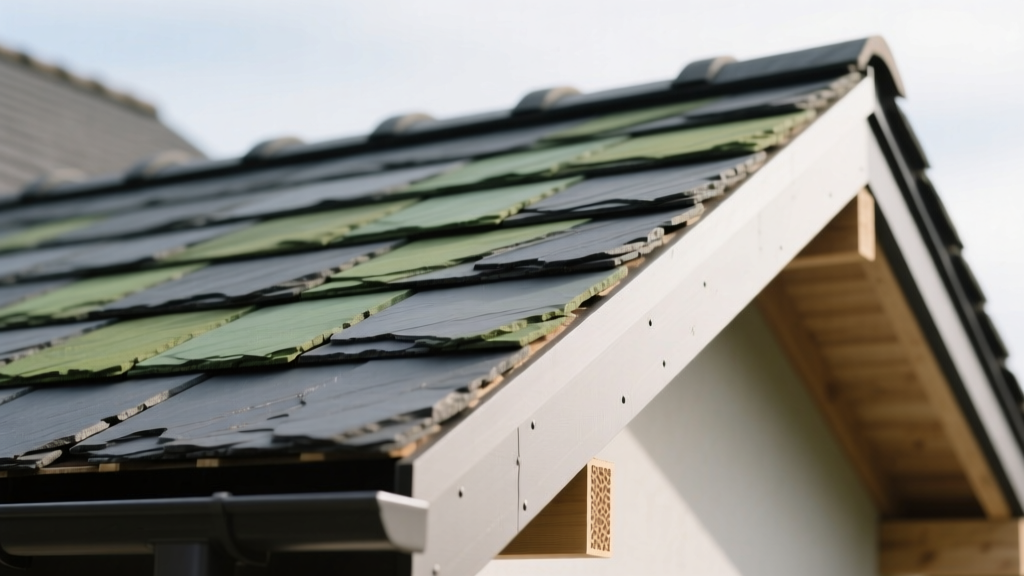
To understand what slate roofing material is, you must look at its geological origins. Slate is a fine-grained, foliated metamorphic rock derived from shale or volcanic ash that has been subjected to intense heat and pressure over millions of years. This metamorphic process creates "cleavage planes"—distinct, parallel layers that allow quarries to split the stone into remarkably thin, uniform, and completely waterproof sheets.
Unlike extruded synthetic materials or molded clay tiles, every piece of natural slate is unique. The manufacturing process remains largely unchanged since the 19th century: blocks are sawn from the quarry, split by hand along the cleavage plane using a slate hammer and splitting chisel, trimmed to dimension, and punched for nail holes. This labor-intensive extraction is the primary driver behind slate's premium market position.
The ASTM C406 Grading System: Never Buy Ungraded Slate
The most critical factor in selecting slate is its durability rating. The American Society for Testing and Materials (ASTM) standard C406 classifies roofing slate into three distinct grades based on water absorption and modulus of rupture. Water absorption is the enemy of roofing stone; in freeze-thaw climates, absorbed water expands when frozen, causing the slate to delaminate and spall.
| ASTM Grade | Expected Lifespan | Max Water Absorption | Recommended Application |
|---|---|---|---|
| S1 | 75+ Years | 0.25% | All climates, including severe freeze-thaw regions |
| S2 | 40 to 75 Years | 0.45% | Moderate climates, steep slopes (>8:12 pitch) |
| S3 | 20 to 40 Years | > 0.45% | Interior applications, vertical cladding, or temporary structures |
Buyer's Rule: Always demand an ASTM C406 certification report from your supplier. According to the Slate Roofing Contractors Association (SRCA), installing S2 or S3 slate in northern climates will result in catastrophic delamination within two decades.
Provenance Matters: North American vs. Imported Slate
The chemical composition of slate varies wildly by quarry location, dictating its color, hardness, and longevity.
1. Buckingham, Virginia (Unfading Black)
Extracted from the Arvonia formation, Buckingham slate is a carbonaceous slate renowned for its dense, unfading charcoal-black color. It is widely considered the premier S1 roofing slate in North America, frequently specified for institutional and historic restoration projects.
2. The Taconic Range: Vermont and New York
This region produces a diverse palette of S1 slates, including Unfading Green, Mottled Green and Purple, and Unfading Red. The presence of chlorite gives the green slates their hue, while iron oxide creates the reds. Vermont slates are highly durable and represent the bulk of premium residential installations.
3. Pennsylvania "Soft Vein" (A Buyer's Warning)
4. Imported Slate (Spain and China)
Spain is the world's largest exporter of roofing slate. While top-tier Spanish quarries produce excellent S1 material, the market is flooded with lower-grade exports that lack proper ASTM testing. Chinese slate is often cheaper but notoriously prone to pyrite (iron sulfide) inclusions, which rust when exposed to moisture, leaving unsightly brown streaks and structural pitting on your roof. If buying imported, require third-party North American testing verification.
Structural Realities: Weight and Framing Requirements
Understanding what slate roofing material is requires understanding its physical mass. Slate is exceptionally heavy. A standard "square" (100 square feet of roof area) of 3/16-inch thick slate weighs between 800 and 1,000 pounds. If you opt for a "textural" or "graduated" slate roof—where thicker, longer slates are placed at the eaves and thinner ones at the ridge—the weight can exceed 1,500 pounds per square.
Before purchasing slate, you must hire a structural engineer to evaluate your roof framing. Standard 2x6 or 2x8 trusses spaced 24 inches on center are rarely sufficient. Most slate roofs require solid wood decking (minimum 3/4-inch tongue-and-groove or 5/8-inch CDX plywood) and reinforced rafters engineered to support a dead load of 10 to 15 pounds per square foot (PSF) just for the roofing material, plus local snow loads.
2026 Cost Breakdown and Installation Variables
Slate is a generational investment. The pricing below reflects current 2026 market rates for material and specialized labor.
| Cost Component | Price Range (Per Sq. Ft.) | Notes |
|---|---|---|
| Standard S1 Slate Material | $14.00 - $22.00 | Standard 3/16" thickness, 10"x20" dimensions |
| Textural / Random Width Slate | $20.00 - $35.00 | Varying thicknesses and widths for a rustic look |
| Specialized Slate Installation | $18.00 - $32.00 | Includes copper nails, underlayment, and labor |
| Copper Flashing & Valleys | $25.00 - $45.00 | Linear foot pricing for 20oz copper fabrication |
| Structural Reinforcement | $5.00 - $15.00 | Varies wildly based on existing framing condition |
Total Installed Cost Expectation: Homeowners should budget between $35.00 and $55.00 per square foot for a complete, code-compliant S1 slate roof system in 2026. While this is 4 to 6 times the cost of architectural asphalt shingles, the National Park Service notes in their Preservation Brief on Slate Roofs that a properly installed slate roof will easily outlast the building's original plumbing, electrical, and HVAC systems.
The Hardware: Fasteners and Flashing Specifications
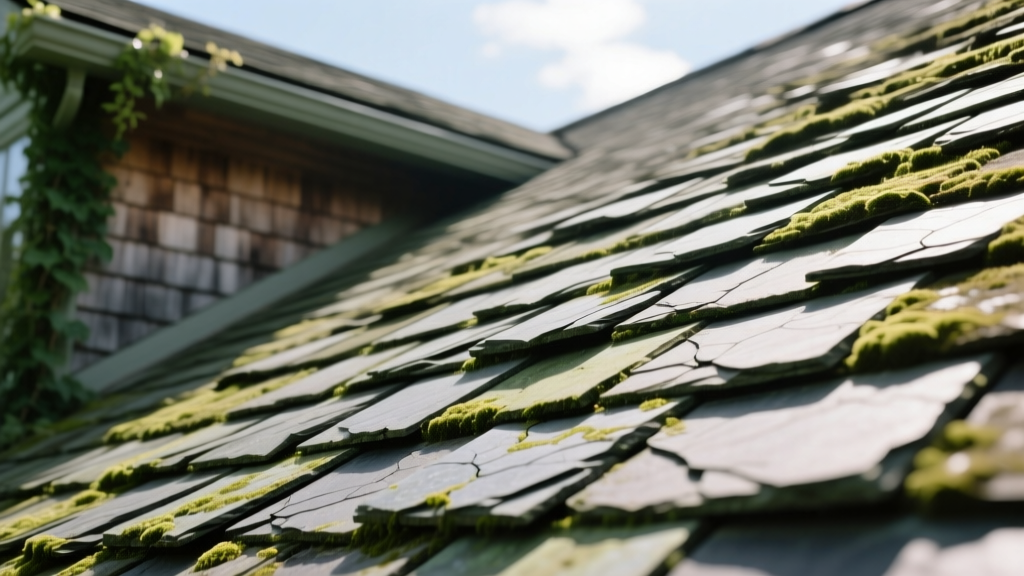
The most common cause of slate roof failure is not the stone itself, but the corrosion of the fasteners and flashing. If you are investing in a 100-year roof, the hardware must match that lifespan.
- Nails: Use only large-head, solid copper nails (typically 10 or 12 gauge) or hot-dipped stainless steel. Never use electro-galvanized or aluminum nails. Galvanized nails will rust through in 30 years, causing pristine slates to slide off the roof.
- Flashing: Specify a minimum of 20-ounce cold-rolled copper for all valleys, chimneys, and wall step-flashing. Avoid aluminum or galvanized steel entirely.
- Underlayment: While traditional #30 felt paper is acceptable, modern best practices utilize synthetic, high-tensile underlayments or self-adhering ice and water shields in the lower courses and valleys to prevent ice-dam water intrusion.
- Punching Technique: Slates must be punched from the back (the side facing the roof deck) to the face. This creates a countersunk bevel on the back, allowing the nail head to sit flush without cracking the slate when driven tight.
Buyer's Decision Matrix: Is Slate Right for Your Project?
Use this framework to determine if natural slate aligns with your project parameters:
Choose Natural Slate If:
- Your roof pitch is 8:12 or steeper (slate relies on gravity and headlap for water shedding; it is not waterproof on low slopes).
- You are building a legacy home, historic restoration, or high-end architectural project where lifecycle cost matters more than upfront capital.
- Your local zoning or HOA mandates premium, natural exterior materials.
- You have the budget to reinforce your roof framing to support a 12 PSF dead load.
Consider Synthetic Slate or Metal Alternatives If:
- Your roof framing cannot be structurally reinforced without prohibitive costs.
- Your roof features complex geometry with numerous dormers, skylights, and low-pitch valleys (which exponentially increase slate labor and waste).
- You require a Class A fire and impact-resistant roof but are constrained to a budget under $18.00 per square foot installed.
Ultimately, knowing what slate roofing material is means recognizing it as a structural system, not just a surface covering. When sourced to ASTM S1 standards, fastened with copper, and installed by certified tradesmen, natural slate remains the undisputed pinnacle of roofing longevity.
Written by
James ThorntonJames Thornton is a construction industry veteran with 25 years of hands-on experience in wood framing, lumber grading, and residential building codes. He started as a framing carpenter in rural Oregon, earned his ICC Residential Building Inspector certification, and eventually became a senior plan reviewer for the City of Portland Bureau of Development Services. James holds a B.S. in Wood Science & Technology from Oregon State University and is a certified lumber grader through the West Coast Lumber Inspection Bureau (WCLIB). He has inspected over 3,000 residential construction sites and authored the city's internal guide on advanced framing techniques (2x6 at 24" O.C.). James lives in Bend, OR, where he builds custom timber-frame cabins and competes in lumberjack sports.
More from James Thornton
View all
Insulation
Best Home Insulation Materials: Complete 2026 Guide
Compare top home insulation materials for 2026. Find R-values, installed costs per square foot, and best uses for fiberglass, spray foam, and mineral wool.
Aug 4, 2026

Sustainable Building
Certify Your Green Building Material for LEED and WELL
Step-by-step guide to certifying a green building material for LEED v5 and WELL v2. Master EPDs, HPDs, and VOC limits for 2026 project specifications.
Aug 4, 2026

Stone & Masonry
Veneer Stacked Stone Panels: Interior Design & Style Showcase
Discover how veneer stacked stone panels transform interiors. Explore modern design profiles, material pairings, and technical installation specs.
Aug 4, 2026